 923990872b
* Add basic files structure for spanish translation of the doc

* Translate the video tutorial index page

* Translate Before Start page

* Translate What is an app page

* Translate the Bench page

* Translate Conslusion page of the tutorial

* Translate to spanish Tutorial Index page

* Translate to spanish Reports page

* Translate to Spanish Roles Page

* Translate to Spanish the Tutorial Model Page

* Translate to Spanish the tutorial Single Doctypes page

* Translate to Spanish the tutorial Doctype files structure page

* Translate to Spanish the tutorial Start Bench page

* Translate to Spanish the tutorial New App page

* Translate to Spanish the tutorial Client Side Script page

* Translate to Spanish the tutorial Users and records page

* Translate to Spanish the tutorial Setting Up the site page

* Translate to Spanish the tutorial Task Runner page

* Translate to Spanish the tutorial Controllers Page

* Translate to Spanish the tutorial Doctypes page

* Translate to Spanish the tutorial Naming And Linking page

* Translate to Spanish the tutorial Web Views page

* Add basic file structure to translate the bench section of the tutorial

* [docs] Translate to Spanish the tutorial Adding custom domain page

* [docs] Translate to Spanish the tutorial Configuring HTTPS page

* [docs] Translate to Spanish the tutorial Diagnosing the Scheduler page

* [docs] Translate to Spanish the tutorial Settings Site Limits\ page

* [docs] Translate to Spanish the tutorial Setup Production page

* [docs] Translate to Spanish the tutorial Bench ProcFile page

* [docs] Translate to Spanish the tutorial Manual Setup page

* [docs] Translate to Spanish the tutorial Background Services page

* [docs] Translate to Spanish the tutorial Lets Encrypt Setup page

* [docs] Translate to Spanish the tutorial Setup Multitenancy page

* [docs] Translate to Spanish the tutorial Bench Commands page
3.3 KiB
Uso de Let's Encrypt para configurar HTTPS
##Prerrequisitos
- Necesitas tener una configuración Multitenant
- Su sitio debería ser accesible a traves de un dominio válido
- Necesitas permisos de administrados en el servidor
Nota : Los certificados de Let's Encrypt expiran cada 3 meses
Usando el comando bench
Ejecutar:
sudo -H bench setup lets-encrypt [site-name]
Van a aparecer varios prompts, responde a todo. Este comando también va a agregar una entrada a crontab del usuario que esta intentando renovar el certificado cada mes.
Dominios personalizados
Puedes configurar Let's Encrypt para dominios personalizados. Solo usando la opción --custom-domain
sudo -H bench setup lets-encrypt [site-name] --custom-domain [custom-domain]
Renovar Certificados
Para la renovación manual de certificados puedes usar:
sudo bench renew-lets-encrypt
Método Manual
Descarga el script apropiado de Certbot-auto en el directorio /opt
https://certbot.eff.org/
Detener el servicio / proceso nginx
$ sudo service nginx stop
Ejecutar Certbot
$ ./opt/certbot-auto certonly --standalone
Despues que letsencrypt se inicializa, vas a tener que llenar algunas informaciones. Los prompts pueden variar de si haz usado o no Let's Encrypt antes, pero vamos a guiarte en su primera vez.
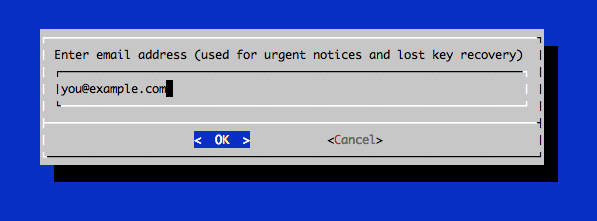
En el prompt, ingresar la dirección de correo eléctronico que será usada para notificaciones y recuperación de claves perdidas:
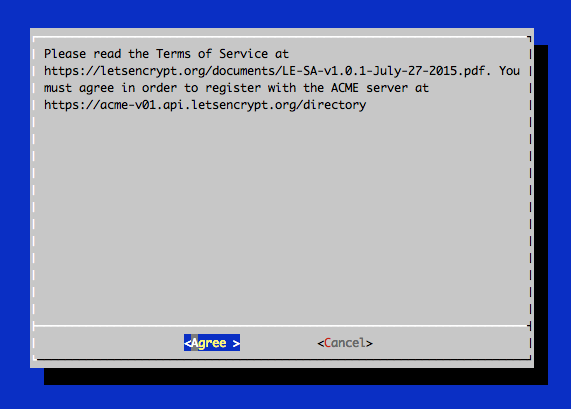
Debes aceptar el acuerdo de subscripción de Let's Encrypt, selecciona Agree:
Luego ingresa el nombre de su dominio(s). Nota que si deseas un simple certificado para trabajar con varios nombres de dominios (ejemplo: example.com y www.example.com), asegurate de incluirlos todos:

Archivos de certificados
Despues de obtener el certificado, va a tener los siguientes archivos PEM-encoded:
- cert.pem: El certificado de su dominio
- chain.pem: La cadena del certificado de Let's Encrypt
- fullchain.pem: cert.pem y chain.pem combinados
- privkey.pem: La clave privada de su certificado.
Estos certificados estan almacenados en el directorio /etc/letsencrypt/live/example.com
Configurar los certificados para su site(s)
Vaya al archivo site_config.json del site donde tiene erpnext
$ cd frappe-bench/sites/{{nombre_sitio}}
Agrega las siguientes lineas al archivo site_config.json
"ssl_certificate": "/etc/letsencrypt/live/example.com/fullchain.pem",
"ssl_certificate_key": "/etc/letsencrypt/live/example.com/privkey.pem"
Regenerar las configuraciones de nginx
$ bench setup nginx
Reiniciar el servidor nginx
$ sudo service nginx restart
Renovació Automática (experimental)
Accede como root o como un usuario con privileges de administrador, ejecuta crontab -e y presiona enter:
# renovar el certificado de letsencrypt todos los días primero de cada mes y recibe un email si el comando ha sido ejecutado
MAILTO="mail@example.com"
0 0 1-7 * * [ "$(date '+\%a')" = "Mon" ] && sudo service nginx stop && /opt/certbot-auto renew && sudo service nginx start